
Busting 10 Common Homebuying Myths

Whether it’s confusion around credit scores, down payments, or how much home you can afford, these myths can stand in the way of a smart (and achievable!) decision.
The truth? Homeownership is more accessible than you might think. In this guide, we’re setting the record straight by debunking 10 of the most common homebuying and credit myths. Along the way, we’ll share real tips, updated facts, and insights tailored especially for first-time buyers.
Let’s clear the confusion and help you take the first step toward owning your first home with confidence.

Residence 1 Floor Plan, Tesoro Neighborhood, Amoruso Ranch Community, Amoruso Ranch, California
Myth #1: You must have a 20% down payment
It’s one of the most common misconceptions about buying a home—and one of the most intimidating. The idea that you must have a 20% down payment saved before you can even consider homeownership stops many first-time homebuyers in their tracks. Fortunately, the truth is far more encouraging.
Reality: Most first-time buyers put down far less.
According to the National Association of Realtors, the average down payment for first-time homebuyers in the U.S. in 2024 was just 9%.
While a 20% down payment can help avoid private mortgage insurance (PMI) and secure better loan terms, many lenders offer mortgages with much lower down payment requirements. FHA loans, for example, may require as little as 3.5% down, and VA loans may not require any down payment at all.
When combined with down payment assistance programs (including grants and forgivable loans), saving for a home becomes significantly more manageable—especially for first-time buyers.
For more information, check out our blog Understanding Down Payments on New Construction Homes.

Myth #2: You need perfect credit
If you’ve ever checked your credit score and assumed you needed to improve it before you can start home shopping, you’re not alone. Many first-time homebuyers think they need a perfect credit score to qualify for a mortgage, but this isn’t true.
Reality: You don’t need a perfect score, just a solid one
While having good credit helps secure better interest rates, it’s not a strict requirement for getting a mortgage. Various loan programs cater to buyers with less-than-perfect credit scores, and lenders often work with buyers to improve their credit or find suitable loan options.
The key is showing a history of responsible credit use by paying your bills on time and keeping your credit utilization low. Your credit habits now will affect your buying power later.
Check out our Complete Guide to Credit Scores, where we address common questions and shed light on how your credit score can impact every step of the homebuying journey.

Columbia 2 - 24 Floor Plan, Front Garage Collection, Livingston Community, Calgary, Alberta
Myth #3: Renting is always cheaper than buying
A question you can’t overlook when your living situation changes is: “Is it better for me to rent or buy a home?” At first glance, renting may seem more affordable than owning a home. After all, monthly rent payments can sometimes be lower than a mortgage when you factor in maintenance costs and property taxes, but that comparison doesn’t tell the full story.
Reality: Homeownership builds long-term value
While renting might appear cheaper in the short term, buying a home is an investment that builds equity and can offer long-term financial benefits. Every mortgage payment you make contributes to your equity in the home, not a landlord’s.
Consider the big picture: Rents can rise year after year and may increase faster than wages. With a mortgage, your payments contribute to building equity and ownership stability. Even if rates or terms change over time, your money is going toward something that’s yours. As your home appreciates, so does your investment. There’s lasting value in putting your money toward something that grows with you.
Of course, you’ll want to evaluate your personal situation, including job stability, long-term goals, financial health, and local market conditions, to make an informed choice.
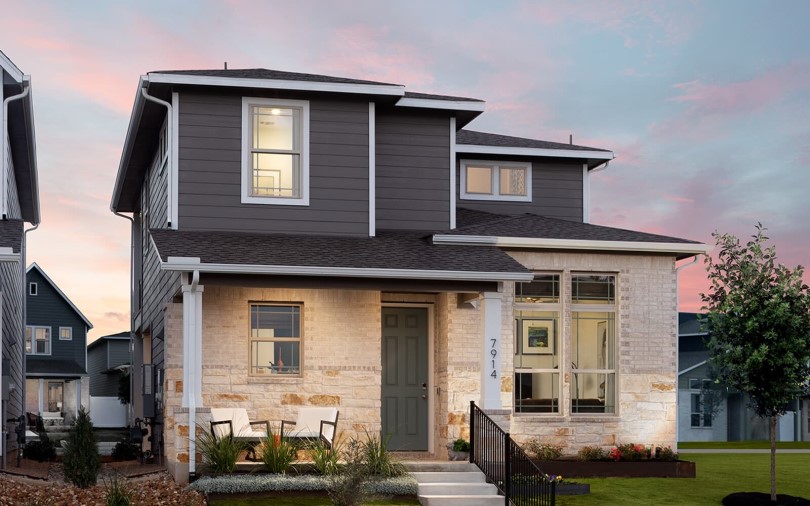
Berkley Floor Plan, Urban Homes Collection, Easton Park Community, Austin, Texas
Myth #4: You should buy the biggest house you can afford
It’s tempting to stretch your budget for the maximum square footage, extra bedrooms, or that dream kitchen. After all, if you’re approved for a certain amount, why not use it all? But buying at the top of your budget isn’t always the best move.
Reality: It’s about buying the right home, not the biggest
While buying the largest house you can find in your budget might be tempting, that’s not always the best financial decision. There can be additional costs you might not have considered, such as higher property taxes, maintenance costs, and utility bills.
Instead, think about how you’ll actually use your space. Buying a home that meets your needs rather than one that maxes out your budget can provide greater financial flexibility for other priorities, like saving, traveling, or investing. It’s all about finding the right balance between size, affordability, and personal comfort.

Artisan Three Floor Plan, Artisan Portfolio, Barefoot Community, Firestone, Colorado
Myth #5: You can’t buy a home with student loan debt
Student loan debt is a reality for many first-time buyers, and it often raises questions about whether homeownership is even possible. The good news? Having student loans doesn’t mean you have to put your homeownership goals on hold.
Reality: Lenders look at how you manage your debt, not just that you have it
Having student loan debt doesn’t automatically disqualify you from buying a home. Mortgage lenders focus more on your debt-to-income ratio than the presence of student loans alone. The biggest consideration will be whether your debts leave you enough room in your monthly budget to make your mortgage payments.
If your monthly debt payments are reasonable compared to your income and you have a steady financial history, you may still qualify for a loan. The key is demonstrating that you can handle your debt responsibly.

Solstice Floor Plan, Mariposa Collection, Blossom Rock Community, Apache Junction, Arizona
Myth #6: You should wait for the perfect market conditions
When rates and home prices are in flux, it can be tempting to hold off on buying a home until everything “settles down.” Trying to time the “perfect” housing market is challenging, and if you wait for it to exist, you may miss out on great opportunities.
Reality: There’s no such thing as the perfect time, only the perfect time for you
Market conditions can (and will!) fluctuate. Interest rates rise and fall, inventory changes, and local conditions vary. While it’s smart to be informed, waiting for the “perfect” moment could mean missing out on the perfect home.
Ultimately, the right time to buy a house is when you are financially ready and have found a property that meets your needs and budget. Real estate is a long-term investment, and while market conditions can impact your purchase, they shouldn’t be the sole deciding factor.

Residence 2 Floor Plan, Bloom Collection, Edenglen Community, Ontario, California
Myth #7: You can’t buy a home without a traditional 9-to-5 job
Many buyers assume that without a standard full-time job and steady paycheck, qualifying for a mortgage is off the table. The reality is that lenders are less concerned with how you earn your income and more focused on how consistent and verifiable it is.
Reality: Alternative income sources are acceptable with the right documentation
You don’t need to work a traditional 9-to-5 job to buy a home; rather, lenders want to see a reliable income history. They will look for at least two years of steady, documented income along with tax returns and other financial records that demonstrate your ability to repay the loan.
In some cases, even a year of income may be considered, depending on the lender and your overall financial profile. What matters most is consistency of income, clear, organized financial records, a manageable debt-to-income ratio, and strong credit and savings history.

Myth #8: The down payment is the only upfront cost
When planning to buy a home, many first-time homebuyers focus solely on saving for the down payment. While that’s certainly a big piece of the puzzle, it’s not the only expense you’ll need to prepare for at closing.
Reality: There are additional upfront costs to consider
The overall “cash to close” refers to the total amount of money a homebuyer needs to bring to the closing table to finalize the purchase of a property.
When you signed a purchase agreement for your home, you likely made an earnest money or initial deposit, which is applied toward your total down payment. Your remaining down payment is typically the largest portion of your cash to close, with the rest of it made up of closing costs, escrow and prepaid charges, and any additional fees. Closing costs are typically around 3%–6% of the loan amount and include things like loan origination, appraisal, escrow, and title fees.
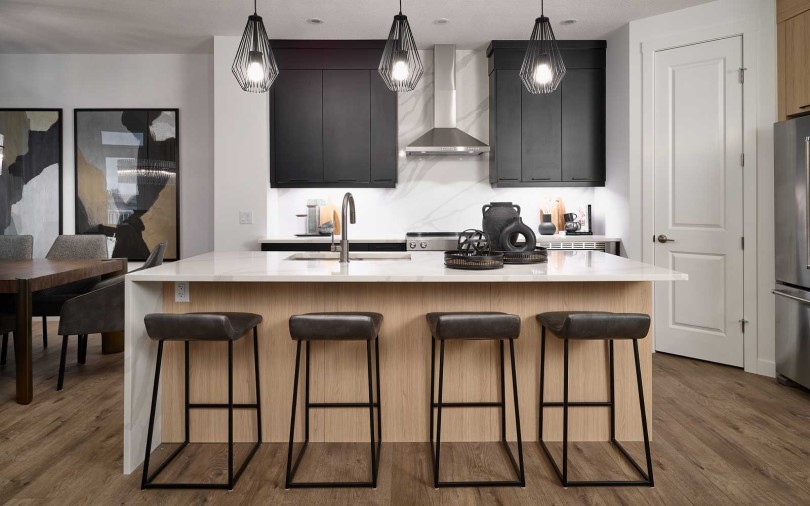
Robson 24 Floor Plan, Front Garage Collection, Creekstone Community, Calgary, Alberta
Myth #9: New construction is always more expensive than existing homes
An important question you may not be considering in your homebuying journey is whether to buy new construction or a resale home.
It’s easy to assume that buying a brand-new home will cost significantly more than purchasing a resale home. After all, new homes come with modern finishes, energy-efficient systems, and updated layouts—it might seem too good to be true that you could get your dream home at a price you can afford!
Reality: Construction homes can offer long-term value and cost savings
It’s a common misconception that new construction homes are always more expensive than existing resale homes. Even if the initial price tag seems higher compared to similarly sized older homes, several factors can make new homes a better investment in the long run, including lower maintenance costs, energy-efficient systems, and new home warranties on major systems and structural components.
When comparing new construction to resale, look beyond the listing price. You’ll want to factor in estimated maintenance, energy costs, and any upgrades required. A lower price tag on an older home doesn’t always mean a better deal.

Brisa Floor Plan, Vista in Summit Collection, Orchard Hills Community, Irvine, California
Myth #10: All homebuilders are the same
Choosing a homebuilder might seem like a simple matter of picking the location you want to live in and finding a floor plan you like. Not all builders offer the same level of quality, service, or overall experience, and assuming they do can lead to surprises down the road.
Reality: Builder experience, reputation, and standards matter
Every builder brings a different approach to the homebuying experience. The quality of construction and customer service can vary significantly between builders. It’s essential to research and choose a reputable homebuilder with a track record of high-quality work and good customer satisfaction.
A trustworthy builder should offer transparent communication throughout the process, a clear timeline and construction updates, high-quality materials and craftsmanship, a strong home warranty, and responsive customer service.

Savona 28 Floor Plan, Front Garage Conventional Collection, Livingston Community, Calgary, Alberta
The Brookfield Residential Difference
For more than 65 years, Brookfield Residential has been creating the best places to call home. As a land development and home building leader, we continue to maintain the same solid values that have helped us successfully navigate through decades of growth and change.
We’re committed to serving our customers from day one in their new home journey and beyond. We want our homebuyers to feel comfortable, in the know, and in good hands from the first time we connect to long after you’ve moved into your new home.
Start your journey to homeownership today with Brookfield Residential! Explore where we build and connect with our sales team when you’re ready to learn more. We’ll be expecting you!
The information provided in this blog post is for informational purposes only and should not be considered investment, professional, or legal advice. Please consult a professional before making real estate decisions. Brookfield Residential is not responsible for any actions taken based on the information provided.