
What to Look for in a 55+ Active Adult Community

They want more time for the things they love, fewer chores standing in the way, and neighbors who share their pace of life. This is the appeal behind 55+ communities, and it's why so many buyers are taking a closer look at what active adult living actually offers.
Meeting an age requirement is only part of the equation. What sets a community apart is thoughtful design paired with real wellness options. Add in the freedom that comes from less home maintenance, and it starts to feel more like a lifestyle and less like a housing type.
Still, not every community delivers on that promise the same way, which raises the real question buyers are asking themselves early in the search: what should I look for in a 55+ community? The answer touches everything from home design to maintenance expectations to the social fabric of daily life.
This blog walks through the factors that matter most, so you can compare your options with confidence and find a community built for how you want to live.
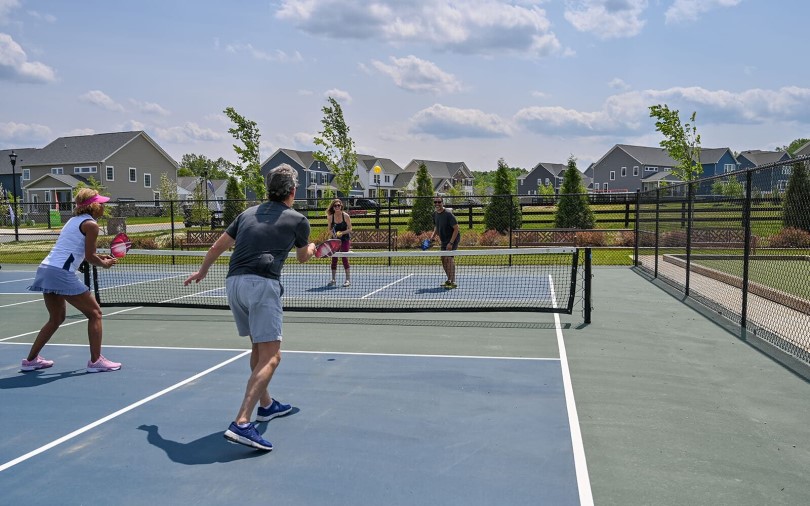
Cascades at Embrey Mill Community, Stafford, Virginia
What Makes 55+ Communities Different from Traditional Senior Living
It's easy to lump every option for older adults into one category, but active adult living and traditional senior living serve very different purposes.
Senior living communities are generally designed around care, whether that's assisted living, memory care, or skilled nursing support. 55+ communities, on the other hand, are built for independent homeowners who want their own space, their own schedule, and none of the services tied to medical care.
That distinction matters because the misconceptions run deep. Some buyers picture shuffleboard courts and not much else, or assume an age-restricted community means giving up their independence. In practice, most communities simply require that at least one resident meet the minimum age, often 55, while a spouse or additional occupant can be younger.
Guests are typically welcome too, usually with a few reasonable limits on how long they can stay. The restriction exists to preserve the character of the neighborhood, not to police who visits for the holidays.
What defines these communities is the lifestyle built around them. Clubhouses function as true social hubs, filled with classes, clubs, and events most days of the week. Fitness centers cater to residents training for a 5K just as often as those easing into a new routine. Homes are designed with comfort and function at the center, and many also include features that make aging in place easier down the road.
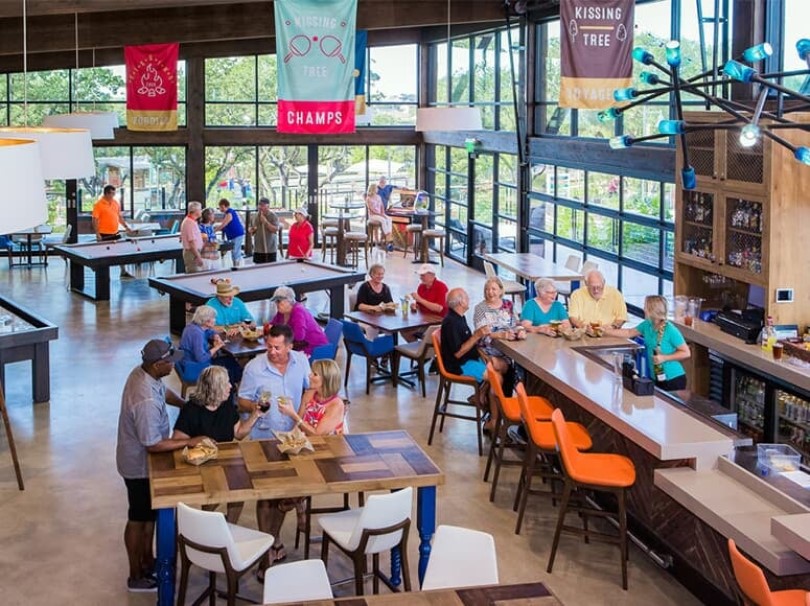
Kissing Tree Community, San Marcos, Texas
How to Evaluate Different Retirement Communities
Before comparing floor plans or amenity lists, it helps to get clear on what daily life should feel like. Evaluating a retirement community starts with a bit of self-reflection.
Think about the pace of your day-to-day. What does an ideal week look like? A full calendar with plans, classes, and people around you? Or unstructured time, quiet mornings, and the freedom to fill a day however you choose? There's no right answer, just an honest one.
How social do you really want to be? Do you want to know your neighbors well, or simply have the option to? Are you drawn to organized events, or do you prefer connection that happens more naturally, like a conversation on a walk?
Wellness deserves the same honesty. Maybe that means scheduled classes, a trainer, and a set routine. Or maybe it means something looser, like having a trail nearby for whenever the mood strikes. Knowing which version sounds like you makes it much easier to recognize the right fit.
These are the questions worth sitting with before touring a single community. Comparing retirement communities gets a lot easier once you know what you're comparing them against.
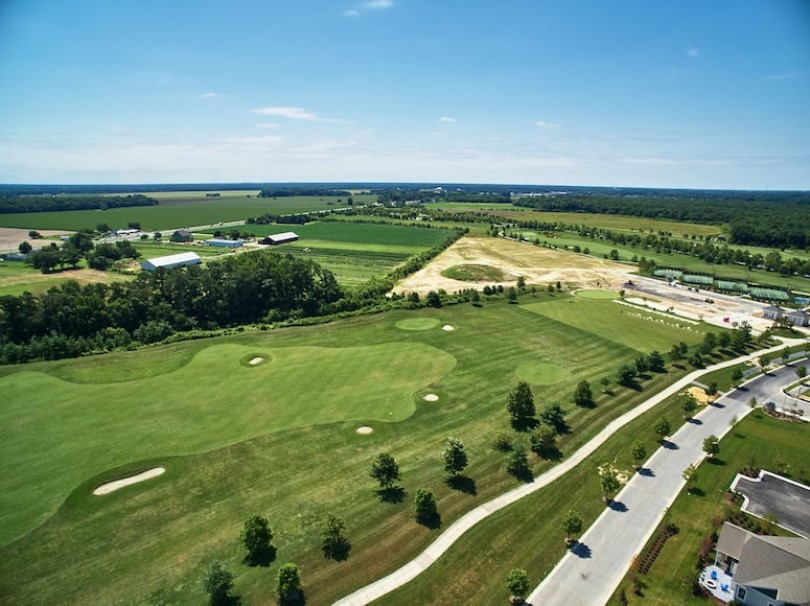
Heritage Shores Community, Bridgeville, Delaware
Which Amenities Matter Most in an Active Adult Community
Amenities are often the first thing buyers notice on a community tour, and for good reason. They shape how residents spend their days.
Fitness and recreation top the list for most buyers. A well-equipped fitness center matters, but so does variety: pickleball courts, bocce ball, walking trails, and space to move in whatever way feels good that day. The best communities offer more than one way to stay active, since no two residents want to spend their mornings the same way.
Wellness-focused amenities go beyond a treadmill and a few weight machines. Yoga studios, spas, and pools built for both laps and leisure all support a slower, more restorative kind of activity. These spaces carry equal weight to the high-energy options, especially for residents easing into a new routine.
Clubhouses deserve their own mention, since they tend to anchor everything else. The best clubhouses feel like a true gathering place, complete with game rooms, event kitchens, billiards, and lounge areas with fireplaces. They give residents a reason to stick around and get comfortable.
Outdoor gathering spaces round things out. Fire pits, sundecks, and community gardens create easy, low-key spots where a quick hello can turn into a longer conversation. These are usually the amenities residents end up using the most, simply because they require the least planning.
When touring communities, it helps to picture an average Tuesday rather than a holiday weekend. The amenities that hold up over time are the ones that fit naturally into everyday routines.
What Low-Maintenance Living Really Means
Yard work, gutter cleaning, snow removal: these are the tasks that quietly eat into weekends without anyone planning for it. Low-maintenance living removes most of that from the equation, and it's one of the most practical benefits of choosing an active adult community.
In many 55+ neighborhoods, an HOA fee covers lawn care, exterior upkeep, and common area maintenance as part of the monthly cost. Some communities extend that further, folding in snow removal or landscaping on individual lots so residents spend less time managing a property and more time enjoying it. These maintenance considerations deserve a direct conversation with the community, since coverage varies quite a bit from one place to the next.
It helps to get specific during a tour or sales conversation. What exactly does the HOA fee cover? Is lawn care included on every lot, or only in certain sections? Are there separate assessments for larger community upgrades, like road repairs or shared facilities? A clear answer to each of these questions makes it much easier to compare communities on equal footing, since sticker price alone rarely tells the full story.
Low-maintenance living means more than free time. It also means more predictable monthly costs, since major repairs and upkeep get folded into a shared system rather than landing as a surprise expense. For many buyers, that predictability is just as valuable as the time it creates.
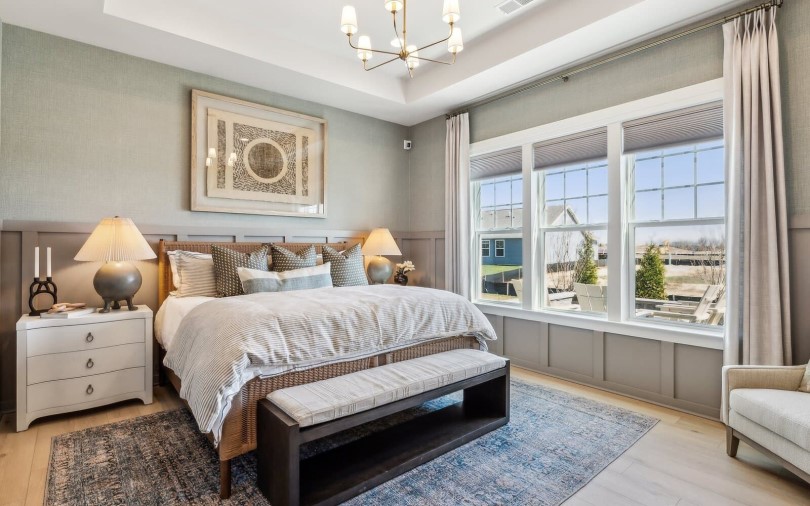
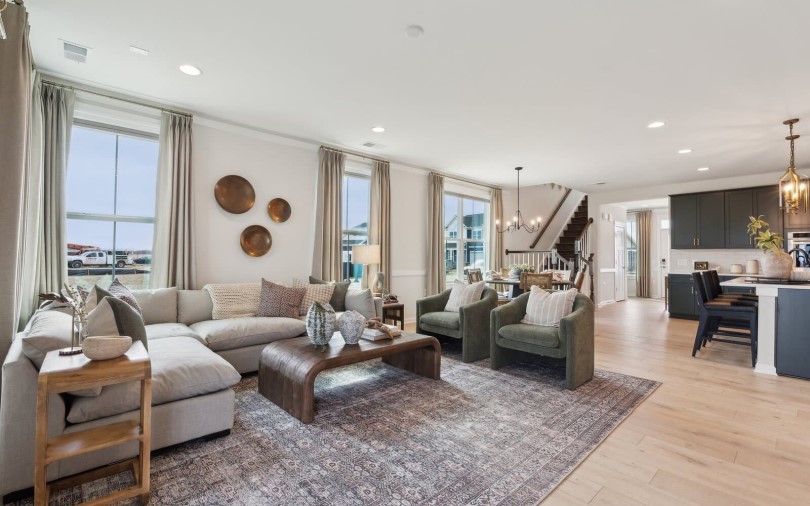
Quincy II Plan, 55+ Lifestyle Collection, Heritage Shores Community, Bridgeville, Delaware
Thoughtful Home Design for Active Adult Living
Home design plays a bigger role in day-to-day comfort than most buyers expect going in. The right layout can make a home feel effortless to live in, while the wrong one adds small frictions that build up over time.
Main-level living tops the list of priorities for many active adult buyers. A primary suite on the main floor, along with a kitchen, living space, and laundry all on one level, means fewer stairs and less strain built into daily routines. Some floor plans include a second primary suite or flexible upper level for guests, hobbies, or a home office, giving residents extra space without sacrificing that single-level convenience on the floor they use most.
Open layouts matter too, extending well beyond aesthetics. Wider walkways, fewer tight corners, and sightlines between the kitchen and living area all make a home easier to navigate and easier to host in.
Accessibility features are worth considering early, even for buyers who don't need them yet. Zero-step entries, wider doorways, and curbless showers can be built in from the start, which is far simpler than retrofitting a home later. This kind of flexibility helps a home continue to work well as your needs change.
Functional spaces complete the picture. A mudroom near the garage, a dedicated office nook, or a covered patio for morning coffee all add up to a home that fits how residents want to live.
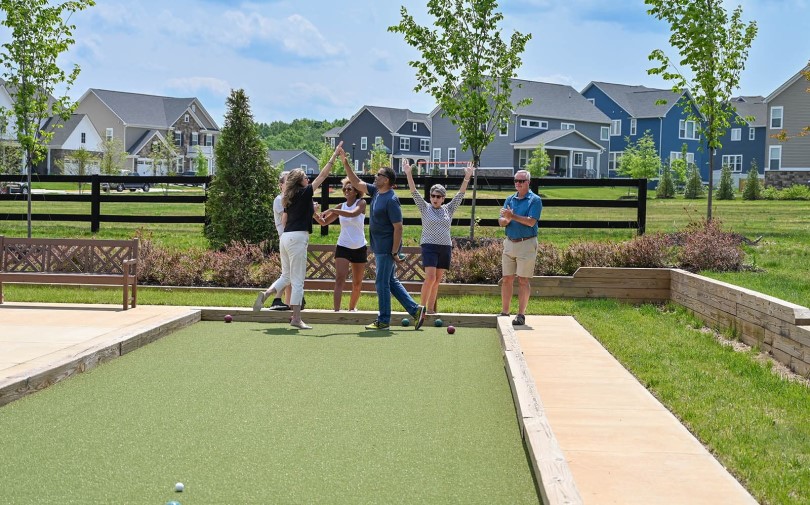
Cascades at Embrey Mill Community, Stafford, Virginia
How Does Community Connection Shape the Experience
Neighbors make a bigger difference than most people expect when settling into a new home. In active adult communities, that connection often forms faster than it would elsewhere, simply because there are more built-in chances to meet people.
Social and recreational activities give residents an easy way to get involved right away. Group fitness classes, card nights, book clubs, and hobby groups all create natural entry points, whether someone wants to dive in immediately or ease in slowly over the first few months.
Shared amenities do a lot of this work quietly. A pool deck, a walking trail, or a fire pit near the clubhouse becomes a regular meeting spot without anyone having to plan it that way, which is part of why thoughtful community design encourages connection between neighbors in the first place. Over time, these small repeated encounters turn into real friendships.
Organized events add another layer. Holiday gatherings, seasonal celebrations, and community-wide activities give residents a reason to show up together, and they tend to be especially valuable for anyone new to the area who wants to build a social circle from scratch.
For many buyers, this sense of connection ends up mattering just as much as any physical amenity. It's often what makes a neighborhood feel like home, long after the initial move-in excitement fades.

Heritage Shores Community, Bridgeville, Delaware
Location, Convenience, and Everyday Access
Amenities and home design matter, but so does everything just outside the community itself. Location shapes how convenient, or how complicated, everyday errands and routines end up feeling.
Proximity to grocery stores, pharmacies, and shopping matters more than it might seem. These are the trips residents make weekly, sometimes more, and a short drive versus a long one adds up fast over time.
Healthcare access deserves close attention too. Having primary care physicians, specialists, and urgent care options within a reasonable distance offers real peace of mind, especially for buyers relocating away from an established network of providers.
Dining and recreation deserve equal attention. A community near restaurants, parks, and cultural attractions gives residents more reasons to get out and stay engaged, rather than relying solely on what's available inside the neighborhood itself.
Highways, airports, and transit access are worth factoring in as well, particularly for buyers who travel often or want to stay close to family in other cities. A community that feels disconnected can start to feel isolating, no matter how well designed the homes and amenities are.
Taking stock of these factors gives buyers a much clearer sense of what everyday life in a community will truly feel like.
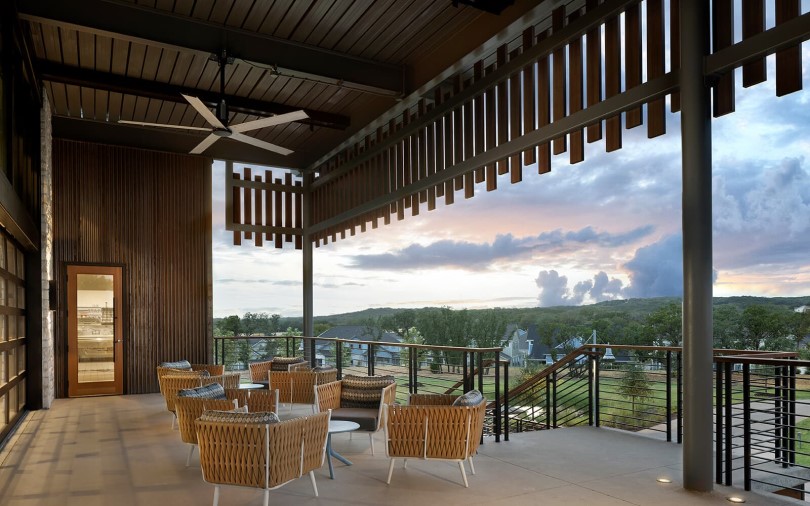
Kissing Tree Community, San Marcos, Texas
What Should Buyers Compare Before Choosing a Community
Amenities, maintenance, design, location, and connection each matter on their own, but it's the whole package that separates one community from another.
Start with the numbers. What does the HOA fee actually cover, and are there any additional fees to budget for? A lower monthly fee doesn't always mean lower overall cost once every line item gets added up, so it helps to ask for a full breakdown rather than a single headline figure.
Go beyond the amenity list and see how those spaces get used. A community with an impressive fitness center is less valuable if it's understaffed or not well-maintained, while a smaller but well-run clubhouse might deliver more day-to-day.
Weigh home design against long-term plans. A single-level layout or first-level primary bedroom with accessible features may not feel like a must-have today, but planning ahead can save a costly move or major renovation down the road. Buyers who see this as a long-term home should plan with years or decades in mind, not just the immediate future.
Consider the social atmosphere honestly. A quick weekday visit rarely captures the full rhythm of a community, so talking with current residents or attending an event before signing anything offers a much clearer read.
Finally, factor in location relative to family, healthcare, and the routines that matter most. A community that scores well on paper can still fall short if it adds friction to the errands and visits that make up a normal week.
Taken together, these comparisons help buyers move past first impressions and choose a community that holds up well beyond the first year.

Hiatt Pointe at Snowden Bridge Community, Winchester, Virginia
Brookfield Residential's Approach to Active Adult Living
At Brookfield Residential, we design our 55+ communities for how people actually want to live at this stage of life: independent, active, and surrounded by neighbors with that same energy. No matter the region, residents can count on main-level living for everyday ease, wellness-focused amenities that range from fitness centers to golf courses, and social infrastructure that gives them real reasons to connect.
Cascades at Embrey Mill in Stafford, Virginia centers on a private 55+ clubhouse with an event kitchen, yoga and weight rooms, and outdoor space built for pickleball and bocce ball.
Heritage Shores in Bridgeville, Delaware pairs main-level home designs with a 28,000-square-foot clubhouse, an 18-hole golf course, and a full wellness center.
Hiatt Pointe at Snowden Bridge in Winchester, Virginia offers villa, garden, and single-family homes with main-level primary suites, plus a clubhouse built around fitness, yoga, and casual outdoor gathering space.
Kissing Tree in San Marcos, Texas takes things to a larger scale with The Mix. This 20-acre amenity campus includes pickleball, bocce ball, a golf course, and Independence Hall, the community's social center for events and resident clubs.
Every one of these communities shares the same goal: neighborhoods shaped around the way residents want to live.
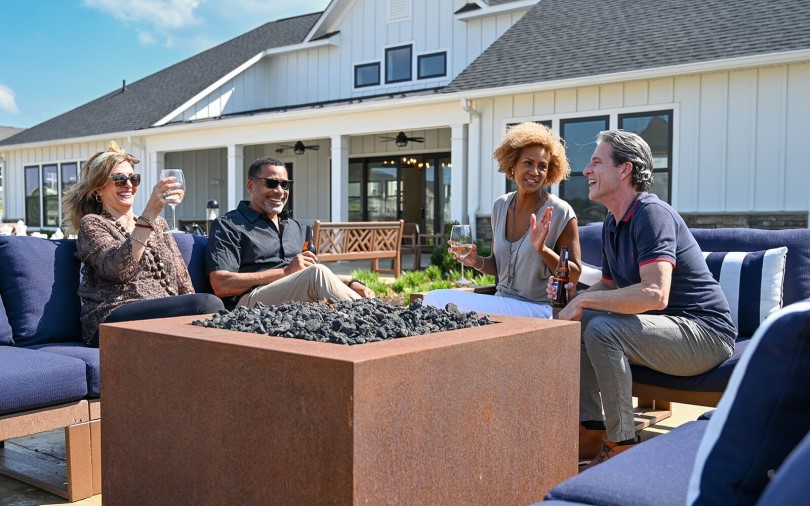
Cascades at Embrey Mill Community, Stafford, Virginia
Your Next Chapter Starts with the Right Community
Choosing a 55+ community comes down to more than a single tour or an impressive amenity list. It's about finding a place that fits how you want to spend your days, from the design of your home to the neighbors you'll get to know along the way.
Lifestyle fit, low-maintenance living, thoughtful design, and everyday convenience all play a role in that decision. Connection carries similar weight, and it's often what residents end up valuing most once they've settled in.
Explore Brookfield Residential’s 55+ active adult communities designed to support wellness, connection, and everyday convenience.
